
UX Intern @ SAHC
The South Asian Heart Center (SAHC) is a nonprofit organization focused on preventing heart disease and diabetes in the South Asian community through education, early detection, lifestyle changes, and personalized health coaching.

Company
Company
South Asian Heart Center
Date
Date
May 2025 - August 2025
My Contributions
Web Design, Comparative Analysis, Video Creation, Icon Design, Professional Review
Usability Testing, Flowchart Mapping,
Low-Fidelity Prototypes,
High-Fidelity Prototypes, Documentation
User Group
Adults at risk for heart disease or type 2 diabetes, seeking accessible and culturally adaptable preventive care.
Individuals in California
seeking self-help legal services
Read My Recommendation on Linkedin by Ashish Mathur Here
Problem Space
Type 2 diabetes is a growing health risk worldwide. Many people lack access to simple, culturally adaptable resources that provide guidance on prevention and management. Traditional programs often fail to resonate with diverse lifestyles and dietary habits, leading to low engagement and limited results. There is a need for supportive, flexible, and accessible tools that help individuals make sustainable changes in areas like diet, movement, stress, and sleep.
Type 2 diabetes is a growing health risk worldwide. Many people lack access to simple, culturally adaptable resources that provide guidance on prevention and management. Traditional programs often fail to resonate with diverse lifestyles and dietary habits, leading to low engagement and limited results. There is a need for supportive, flexible, and accessible tools that help individuals make sustainable changes in areas like diet, movement, stress, and sleep.
Results
The solution is a 7-day digital program called Reversing Diabetes Headstart, designed to help people kickstart sustainable lifestyle changes. Each day focuses on a key wellness theme—such as nutrition, movement, stress, and sleep—delivered through engaging visuals, short educational videos, and actionable tips. The content is structured to be universally relatable, while also adaptable to different cultural contexts, making it easier for a wide range of audiences to adopt healthy habits in a practical and accessible way.
Comparative Analysis
Comparative Analysis
Before starting any design work, I conducted a comparative analysis using Figma using an established lifestyle change program. My goal was to understand not only what content worked, but also how visual and interaction design contributed to engagement.
Before starting any design work, I conducted a comparative analysis using Figma using an established lifestyle change program. My goal was to understand not only what content worked, but also how visual and interaction design contributed to engagement.



Content structure
How daily objectives and activities were introduced.
Tone & Messaging
How encouragement and positive reinforcement were used.
Visual hierarchy Placement of headlines, imagery, and icons for clarity.
Visual hierarchy
Placement of headlines, imagery, and icons for clarity.
What I learned: Consistent use of color cues, icons, and bite-sized visuals made the experience approachable and less overwhelming. These insights guided my own design decisions, ensuring visuals worked hand-in-hand with SAHC’s content.
What I learned: Consistent use of color cues, icons, and bite-sized visuals made the experience approachable and less overwhelming. These insights guided my own design decisions, ensuring visuals worked hand-in-hand with SAHC’s content.
Content structure
How daily objectives and activities were introduced.
Visual hierarchy
Placement of headlines, imagery, and icons for clarity.
Tone & messaging
How encouragement and positive reinforcement were used.
Sketching & Low-Fidelity Concepts
Sketching & Low-Fidelity Concepts
Before moving into high-fidelity design, I sketched early concepts to quickly explore layout options, mascot variations, and interaction ideas. This stage helped me generate multiple possibilities, test different directions, and identify what best aligned with SAHC’s goals. The sketches provided a foundation for translating ideas into digital prototypes with greater clarity and focus.
Before moving into high-fidelity design, I sketched early concepts to quickly explore layout options, mascot variations, and interaction ideas. This stage helped me generate multiple possibilities, test different directions, and identify what best aligned with SAHC’s goals. The sketches provided a foundation for translating ideas into digital prototypes with greater clarity and focus.
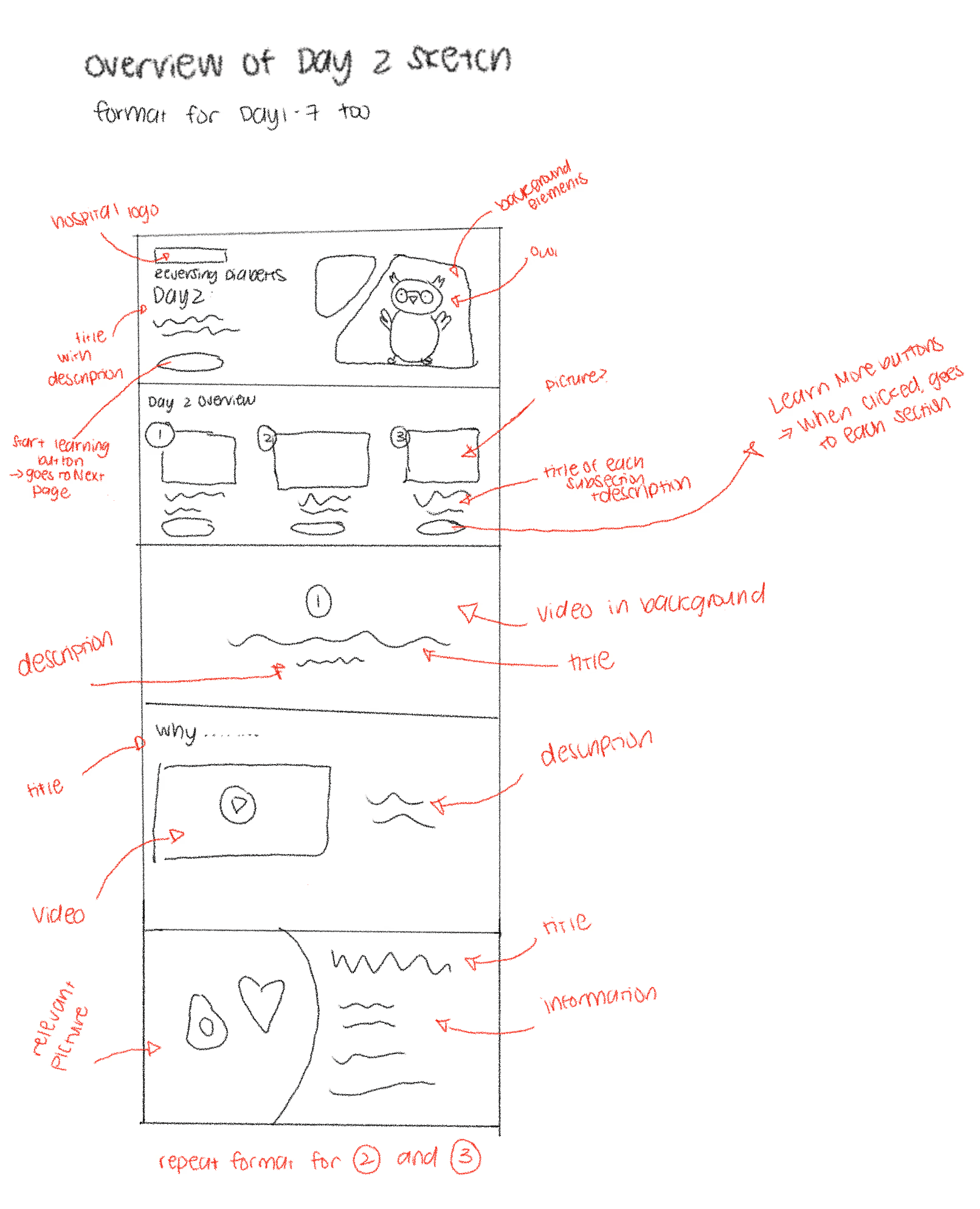
Overview of Day 2 Sketch: Day 2 had the most content provided to me, which allowed me to create one of my first full sketches. This layout also became the foundation for how I suggested structuring the rest of the days.
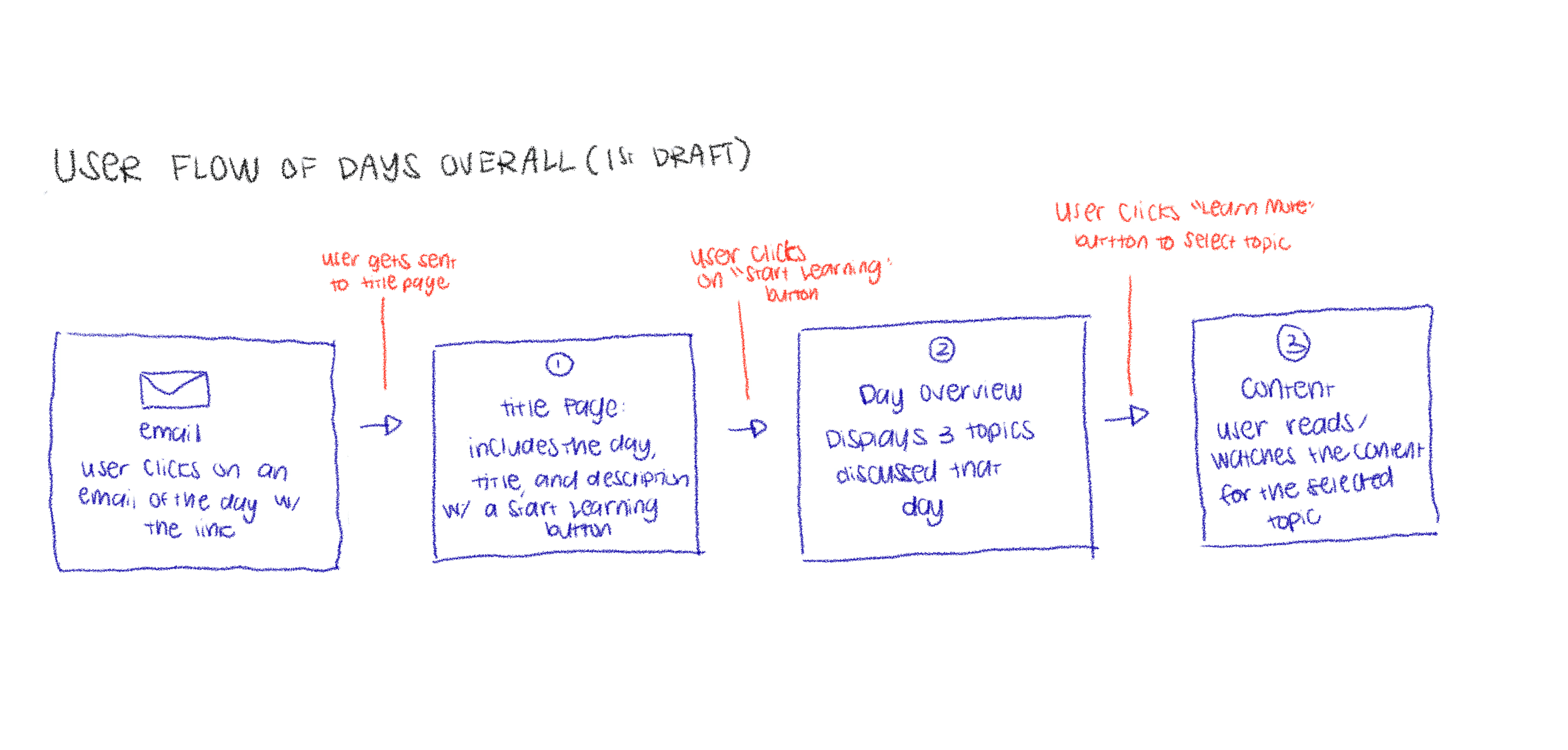
User Flow of Days Overall: I mapped the user flow from the initial email to daily content pages. This clarified navigation early on and ensured the experience was seamless and intuitive.
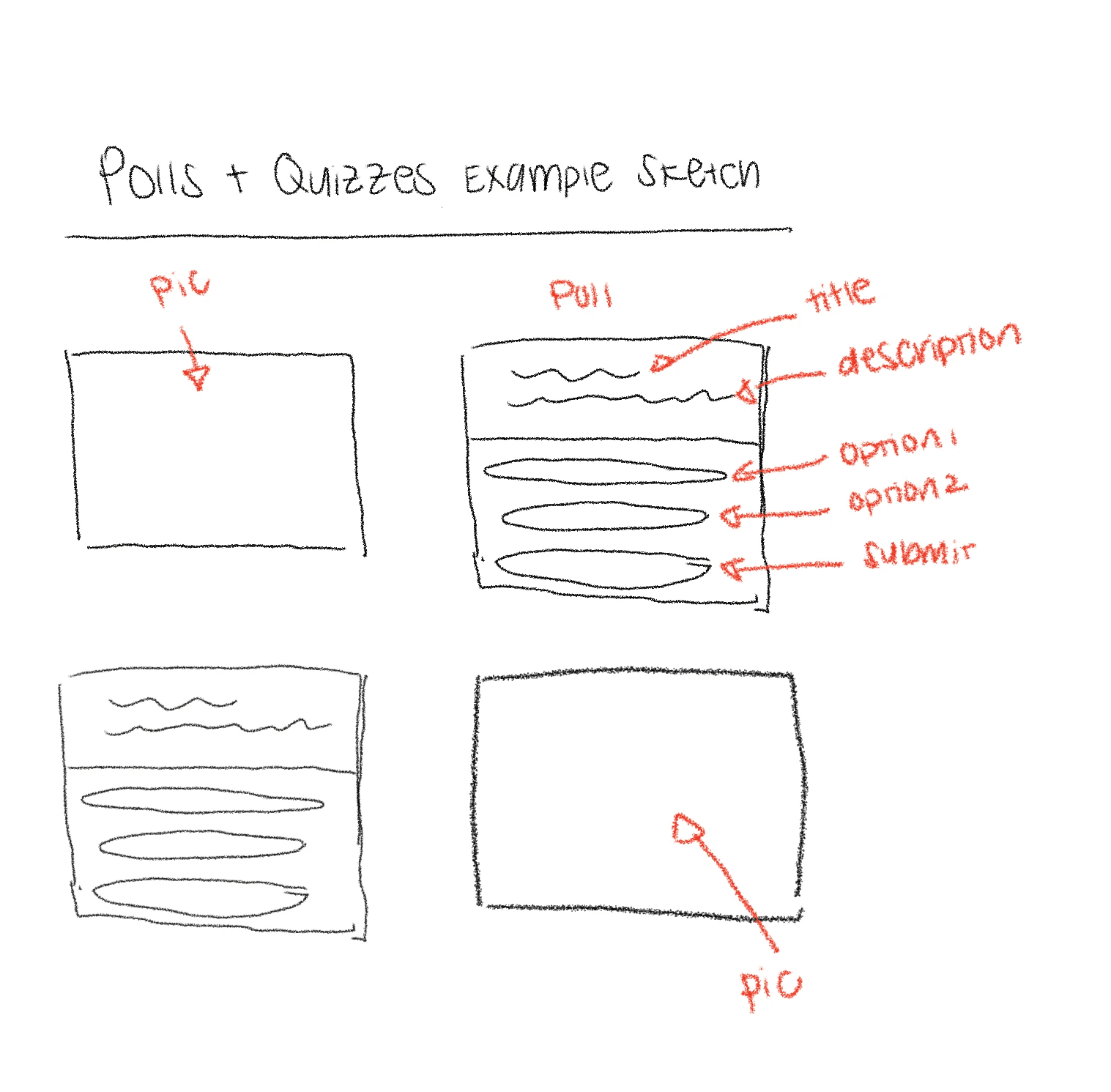
Polls + Quizzes Example Sketch:
Since interactive polls appeared in Day 1 and Day 7, I sketched layout options to show how the title, description, and answer choices could be clearly presented to users.
Polls + Quizzes Example Sketch (Top):
Since interactive polls appeared in Day 1 and Day 7, I sketched layout options to show how the title, description, and answer choices could be clearly presented to users.
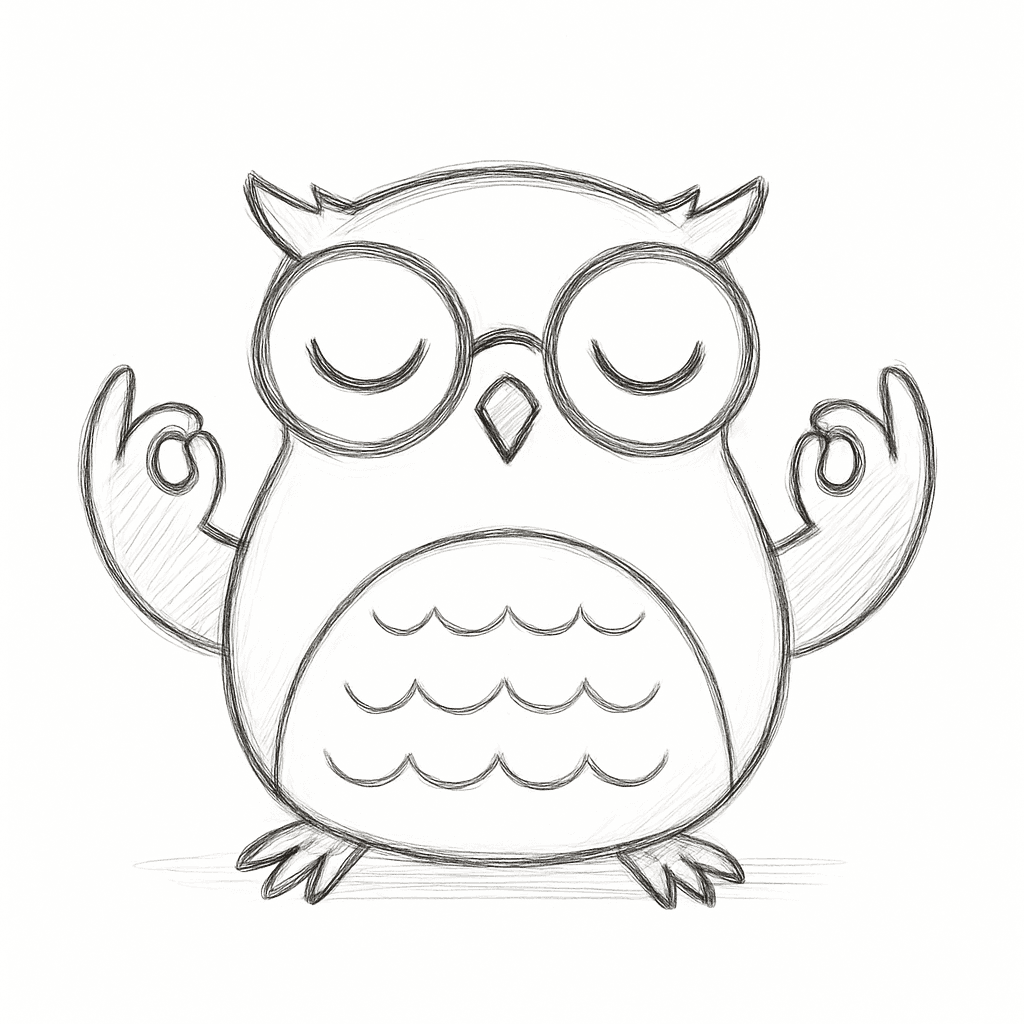
Owl Creation Example Sketch:
I created multiple owl sketches to explore different styles and expressions for the program mascot. Shown here is one early example from that process, where I began experimenting with posture and personality using Procreate.
Owl Creation Example Sketch (Bottom):
I created multiple owl sketches to explore different styles and expressions for the program mascot. Shown here is one early example from that process, where I began experimenting with posture and personality using Procreate.
First Design Concept & Feedback
First Design Concept & Feedback
My first concept tested program structure and interactivity. SAHC appreciated the clear layout and overview page but requested closer alignment with their existing mascot style and stronger use of brand colors. This feedback guided the next phase of refinement.
My first concept tested program structure and interactivity. SAHC appreciated the clear layout and overview page but requested closer alignment with their existing mascot style and stronger use of brand colors. This feedback guided the next phase of refinement.

When I shared it with SAHC, I received both positive and constructive feedback:
What they liked: The clear structure, visual overview page, and potential for interactive elements.
What they wanted refined: The owl mascot differed from SAHC’s style, so they asked me to align it more closely. They also requested stronger integration of brand colors—purple, red, orange, and yellow—for visual consistency.
This feedback shaped the next iteration, ensuring the design aligned with SAHC’s identity while retaining the clarity they valued.
When I shared it with SAHC, I received both positive and constructive feedback:
What they liked: The clear structure, visual overview page, and potential for interactive elements.
What they wanted refined: The owl mascot differed from SAHC’s style, so they asked me to align it more closely. They also requested stronger integration of brand colors—purple, red, orange, and yellow—for visual consistency.
This feedback shaped the next iteration, ensuring the design aligned with SAHC’s identity while retaining the clarity they valued.
Iteration & Feedback Loops
Iteration & Feedback Loops
The first round of feedback informed more than minor adjustments—it reshaped my design approach. Incorporating SAHC’s input, I refined key elements to strengthen brand alignment while ensuring the experience remained structured, engaging, and clear.
The first round of feedback informed more than minor adjustments—it reshaped my design approach. Incorporating SAHC’s input, I refined key elements to strengthen brand alignment while ensuring the experience remained structured, engaging, and clear.

Mascot Consistency & Relatability:
I refined the owl mascot to match SAHC’s style while keeping it playful. Tailoring it to each topic (e.g., lifting weights for “weight loss”) boosted relatability and reinforced the content.
Brand Alignment:
To reflect SAHC’s palette, I rebuilt key elements using their official colors—purple, red, orange, and yellow. Consistent application across webpages and social posts strengthened visual identity and demonstrated how color systems unify touchpoints.
Brand Alignment:
To reflect SAHC’s palette, I rebuilt key elements using their official colors—purple, red, orange, and yellow. Consistent application across webpages and social posts strengthened visual identity and demonstrated how color systems unify touchpoints.
Content Restructuring & Motivation:
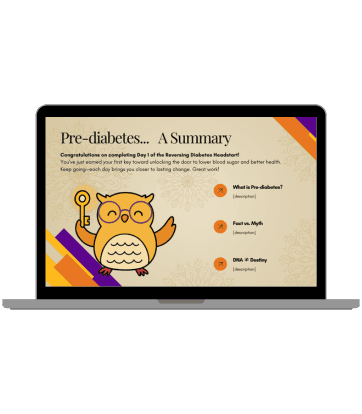
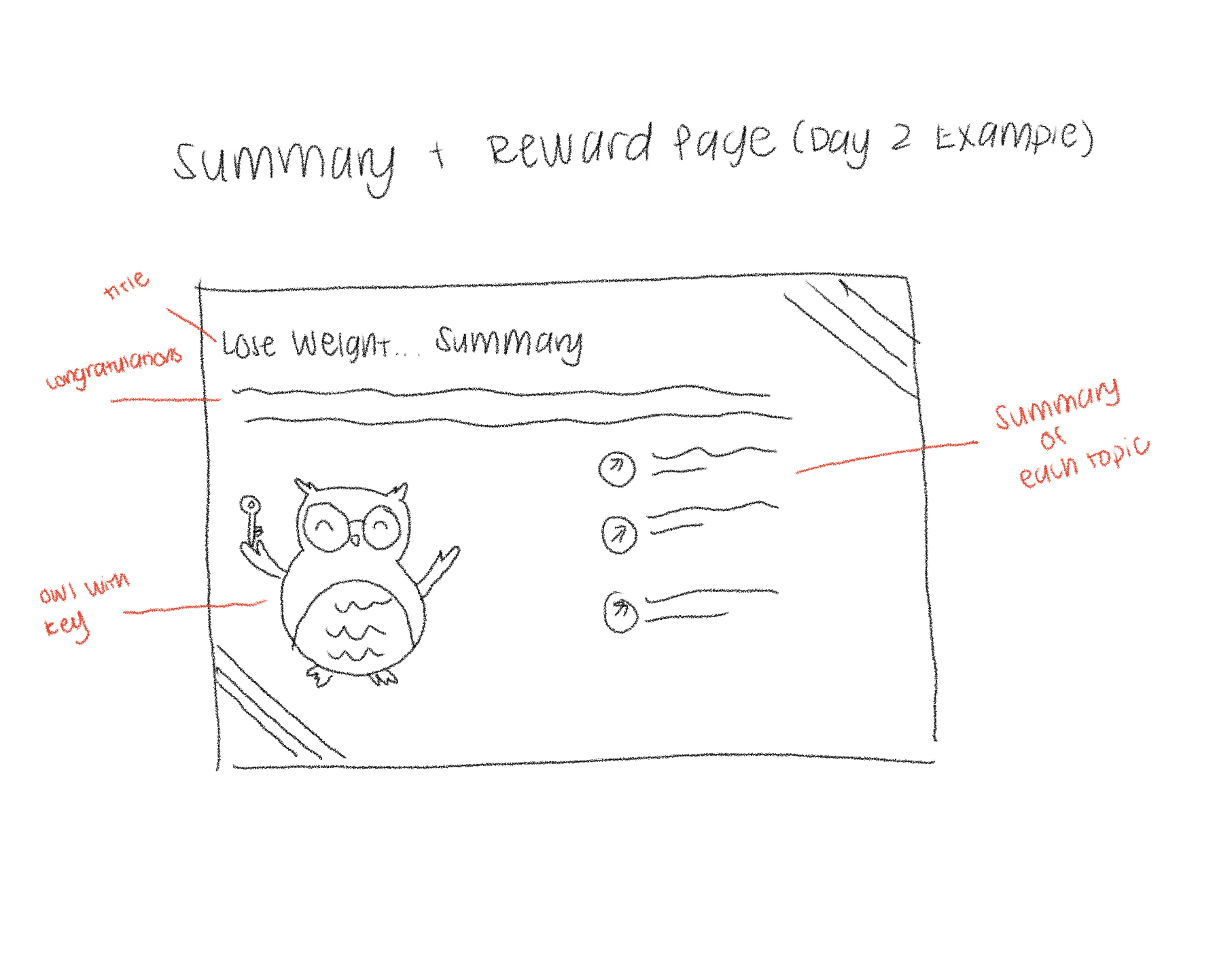
I restructured the program into a three-section overview layout for clearer navigation. With the team, I introduced a “key collection” system, where users earned a key each day to complete the program, and added a day overview page to highlight progress. These changes improved clarity while motivating users to stay engaged.
Summary & Resources Pages:
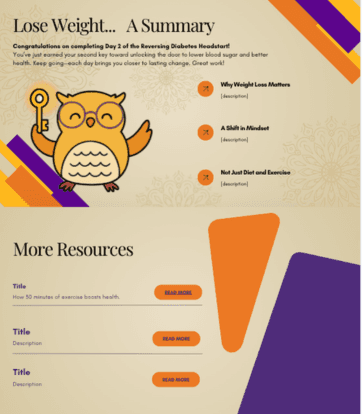
To extend value beyond the daily lessons, I added a summary page that recapped key insights from the program, and a “More Resources” page directing users to additional SAHC content. These additions gave users a clear wrap-up and pathways to continue their learning, reinforcing long-term engagement.
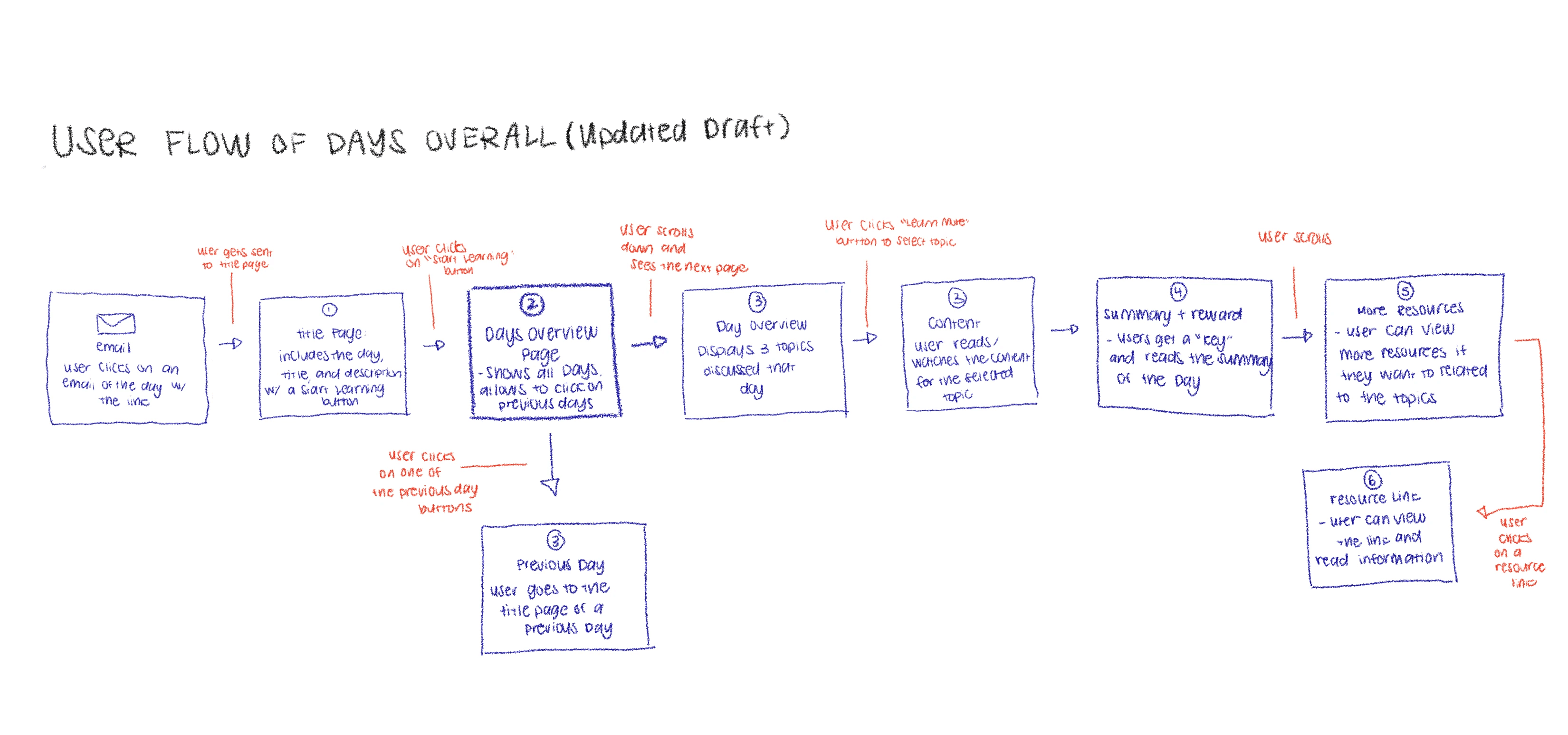
Updated User Flow of Days Overall: I expanded the flow to include a summary page for closure, a resources page for continued learning, and a days overview page that let users revisit past content. These additions gave the program more clarity, flexibility, and a stronger sense of completion.
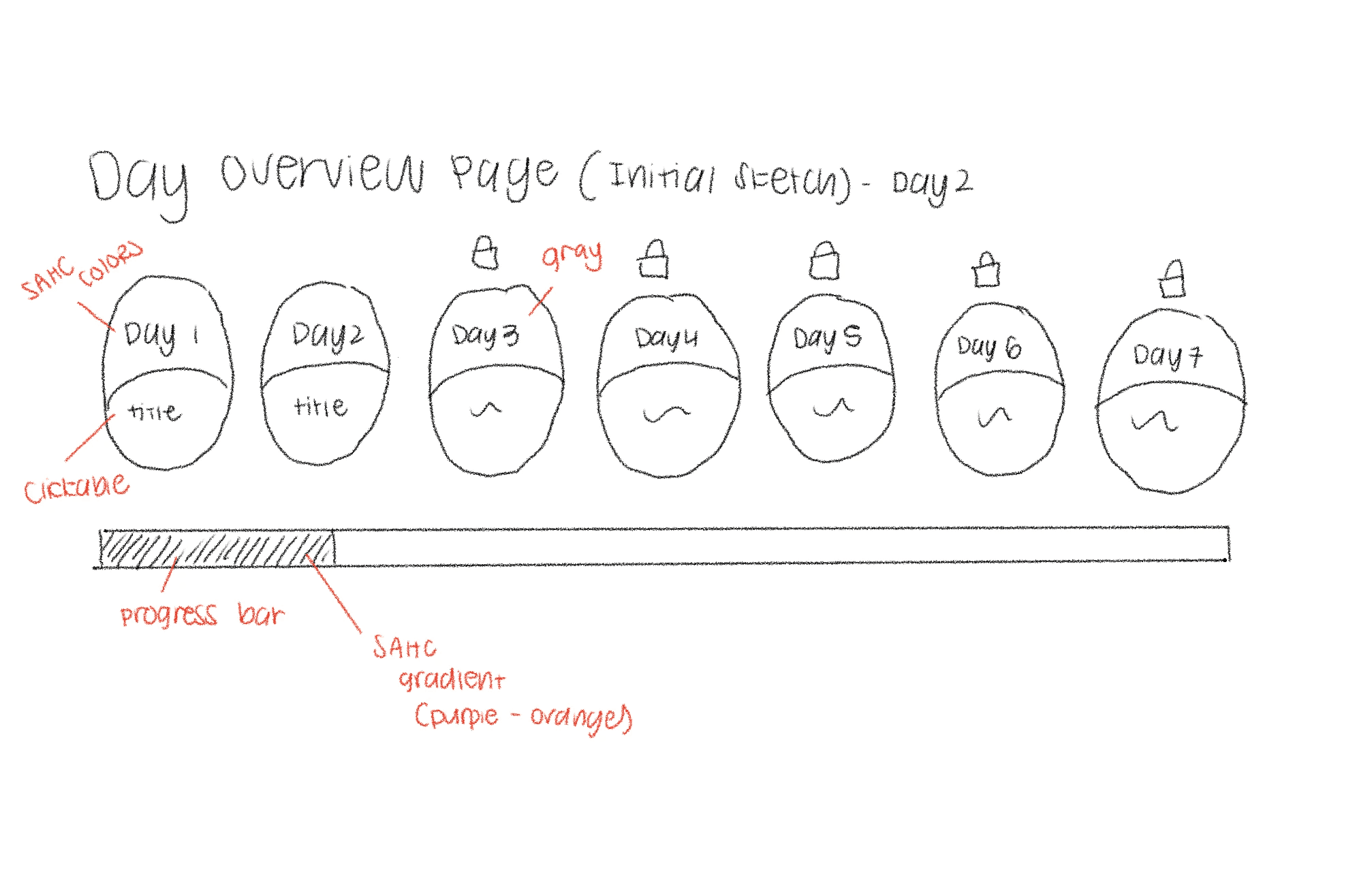
Day Overview Page Initial Sketch
Day Overview Page Initial Sketch (Top)
Summary + Reward Page Initial Sketch
Throughout this stage, I also realized how important communication and iteration were to the project’s success. There were many times when I had to go back and forth with the team, revisiting both designs and content until they felt right. These conversations weren’t setbacks — they were essential to reaching a final product that balanced clarity, engagement, and brand alignment.
Throughout this stage, I also realized how important communication and iteration were to the project’s success. There were many times when I had to go back and forth with the team, revisiting both designs and content until they felt right. These conversations weren’t setbacks — they were essential to reaching a final product that balanced clarity, engagement, and brand alignment.
Mascot Consistency & Relatability:
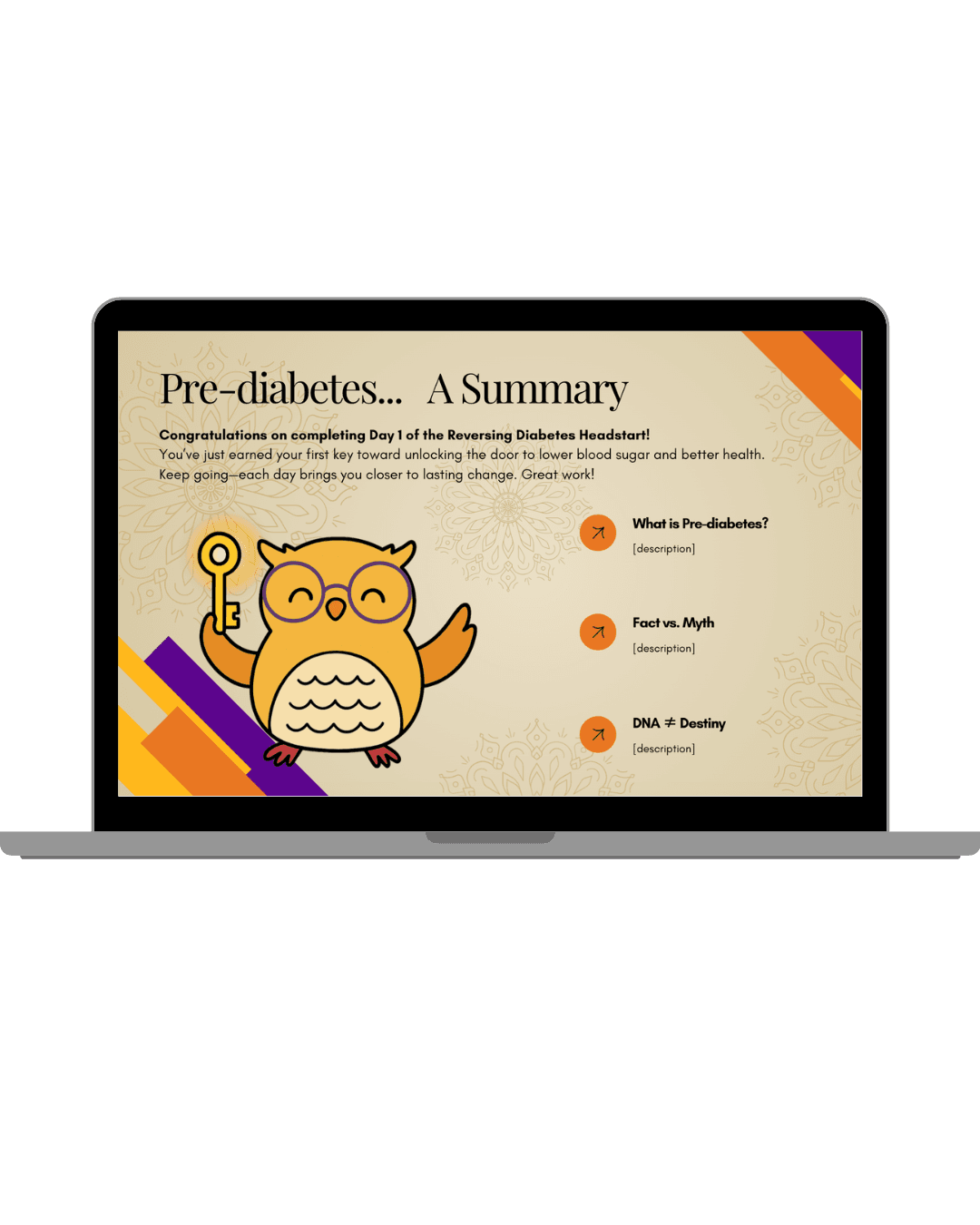
My initial owl mascot was well-received but differed from SAHC’s established illustrations. To maintain consistency with their identity, I refined the design to align with their style while keeping it playful and approachable. I also contextualized the mascot to each day’s topic—for example, lifting weights for “weight loss” or holding healthy foods for “nutrition.” This not only improved relatability but also reinforced the content, showing me how mascots can enhance both storytelling and user comprehension.
Content Restructuring & Motivation:
I restructured the program into a three-section overview layout for clearer navigation. With the team, I introduced a “key collection” system, where users earned a key each day to complete the program, and added a day overview page to highlight progress. These changes improved clarity while motivating users to stay engaged.
Summary & Resources Pages:
To extend value beyond the daily lessons, I added a summary page that recapped key insights from the program, and a “More Resources” page directing users to additional SAHC content. These additions gave users a clear wrap-up and pathways to continue their learning, reinforcing long-term engagement.
Final Protoype
Final Protoype
Disclaimer: This prototype is shown for portfolio purposes, with a focus on design and user experience. Certain content was left unfinished due to project timelines.
Disclaimer: This prototype is shown for portfolio purposes, with a focus on design and user experience. Certain content was left unfinished due to project timelines.
Reflection
Reflection
This project showed me how design choices—like restructuring content, refining layouts, and introducing interactive elements—can turn information into an experience that motivates real action. I also saw how crucial communication and iteration were, since feedback from the team directly shaped many of the final design decisions. An unexpected bonus was how much I learned about the health benefits covered in the program itself, which made the work especially engaging. It felt like the perfect merge of my interests in technology and health, and it strengthened my excitement to keep designing solutions that make preventive care more accessible and meaningful.
This project showed me how design choices—like restructuring content, refining layouts, and introducing interactive elements—can turn information into an experience that motivates real action. I also saw how crucial communication and iteration were, since feedback from the team directly shaped many of the final design decisions. An unexpected bonus was how much I learned about the health benefits covered in the program itself, which made the work especially engaging. It felt like the perfect merge of my interests in technology and health, and it strengthened my excitement to keep designing solutions that make preventive care more accessible and meaningful.
Limitations
Limitations
Due to constant reiterations and feedback cycles, the initial timeline I had planned kept getting delayed, which made it difficult to move forward as quickly as I expected. Time was also a factor—some ideas, like expanding interactive features or testing across a wider audience, couldn’t be fully explored within the project timeline.
However, these challenges taught me to be more adaptable and patient in my design process, and to see delays as opportunities to refine ideas into something stronger.
Due to constant reiterations and feedback cycles, the initial timeline I had planned kept getting delayed, which made it difficult to move forward as quickly as I expected. Time was also a factor—some ideas, like expanding interactive features or testing across a wider audience, couldn’t be fully explored within the project timeline.
However, these challenges taught me to be more adaptable and patient in my design process, and to see delays as opportunities to refine ideas into something stronger.